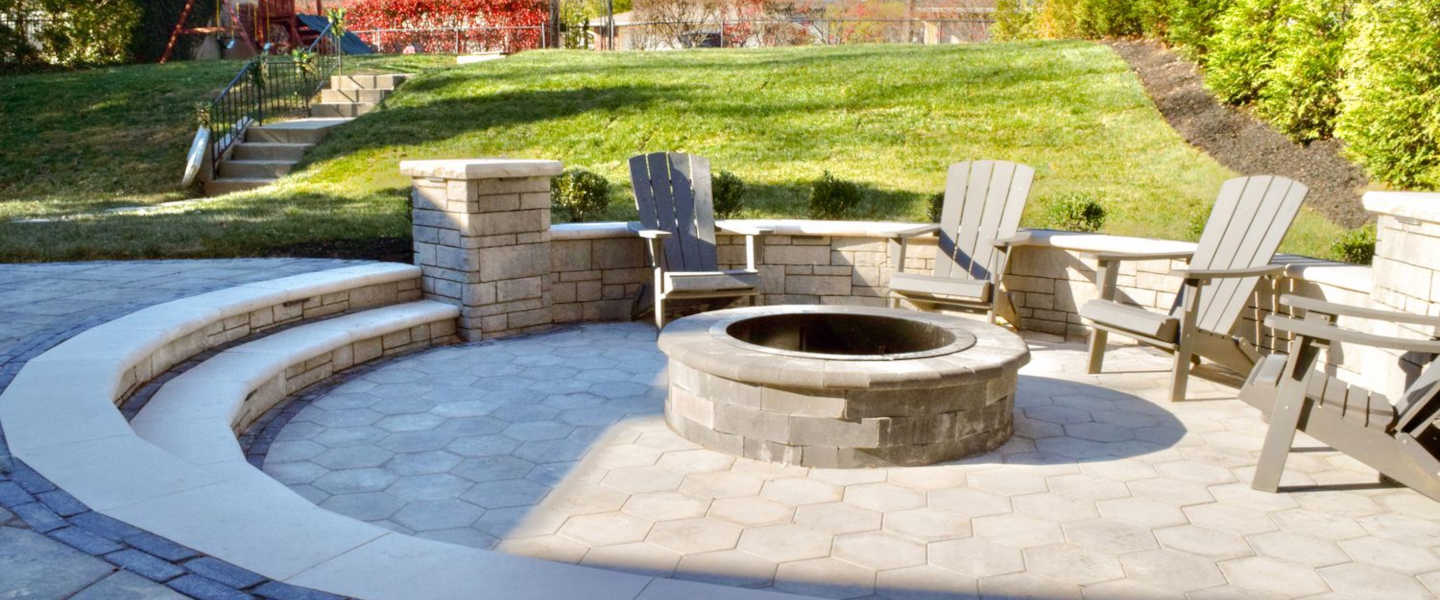
The best fire pit design for winter is a built-in paver or natural stone fire pit with an attached seating wall, set on a properly graded paver patio. It holds heat, stands up to freeze-thaw cycles, and gives you a permanent gathering spot you’ll actually use from November through March. This guide covers the top winter fire pit designs, wood-burning vs. gas, the features that make the biggest difference in cold weather, and what to plan for across Floyds Knobs and the greater Louisville area.
The Top Fire Pit Designs for Winter Use
Not every fire pit holds up to a Southern Indiana winter. These are the designs that perform best when temperatures drop.
1. Built-In Paver Fire Pit with Seating Wall (Best Overall)
A round or square paver fire pit paired with a curved seating wall is our top pick for winter. The seating wall blocks wind, keeps guests close to the heat, and doubles as extra seating without dragging chairs out of storage.
- Permanent, durable, and low maintenance
- Seating wall cuts wind and holds warmth around the fire
- Can be matched to your existing patio pavers or wall block
- Adds lasting value to your outdoor living space
2. Natural Stone Fire Pit (Best for a Rustic Look)
Natural stone fire pits blend into wooded lots and sloped yards common around Floyds Knobs. With a fire-rated liner, stone holds up well to heat and looks better with age.
- Classic, timeless appearance
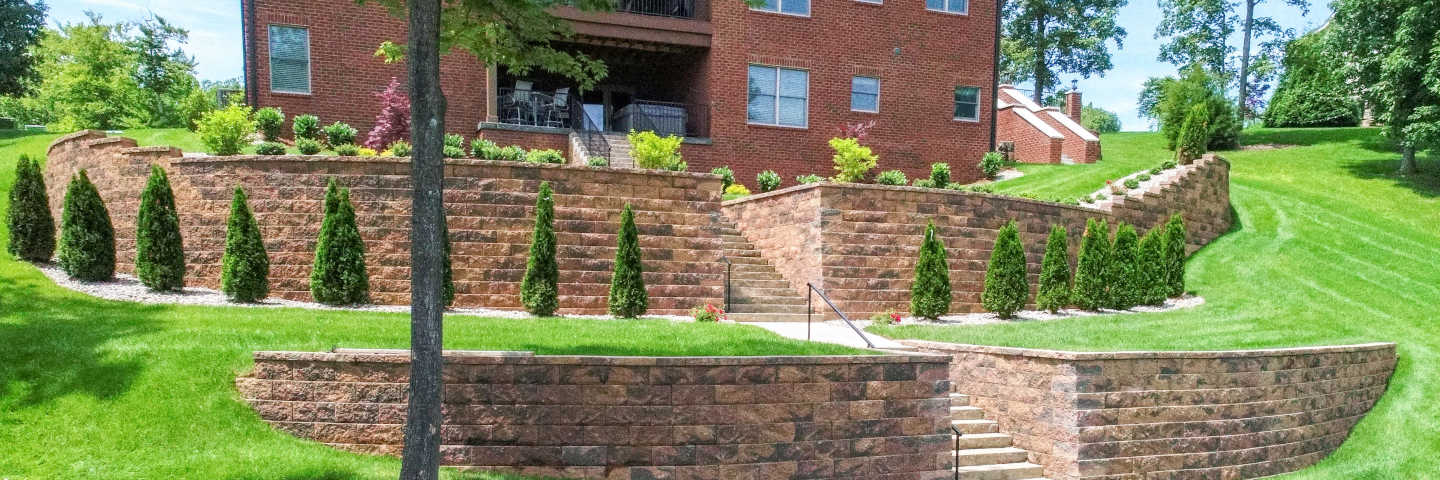
- Works well with retaining walls and natural landscapes
- Each build is one of a kind
3. Gas Fire Pit or Fire Table (Best for Convenience)
A gas fire pit lights with a switch and shuts off just as fast. On a cold weeknight, that convenience means you’ll use it far more often.
- No wood to haul, stack, or keep dry
- No smoke or embers blowing toward guests or the house
- Instant heat with adjustable flame
- Requires a gas line or propane setup
4. Sunken Fire Pit Area (Best for Wind Protection)
A sunken fire pit sits below the surrounding grade with built-in seating around it. Lowering the space naturally shields it from wind, which makes a big difference on cold nights.
- Excellent wind protection
- Creates a cozy, enclosed feel
- Requires careful grading and drainage planning so water doesn’t collect
5. Fire Pit Integrated into a Larger Patio (Best for Entertaining)
For homeowners who host, building the fire pit into a larger patio layout gives you room for seating, a walkway, and even an outdoor kitchen nearby.
- Defined zones for gathering and dining
- Room for larger groups
- Easy access from the house in cold weather
Wood-Burning vs. Gas: Which Is Better for Winter?
For most homeowners who want a fire they’ll actually use all winter, gas is the more practical choice. Wood-burning still wins for anyone who wants the crackle, smell, and bigger heat output of a real fire.
Wood-burning pros:
- Classic campfire experience
- Higher heat output
- Lower upfront setup with no gas line needed
Wood-burning cons:
- Smoke and embers
- Firewood has to be stored and kept dry through winter
- Takes time to light and fully extinguish
Gas pros:
- Instant on and off
- Clean burning with no smoke
- Easy to use on short winter evenings
Gas cons:
- Requires a gas line or propane
- Less heat than a large wood fire
Why Pavers Hold Up Better Through Winter
Freeze-thaw cycles are hard on outdoor surfaces in our region. Water seeps into small cracks, freezes, expands, and breaks the surface apart over time.
Standard poured concrete typically has a PSI of around 3,800. The pavers we install range from 9,000 to 15,000 PSI, making them significantly stronger and more resistant to cracking. Pavers are also installed as individual units, so they flex slightly with ground movement instead of cracking across the whole surface. If one ever gets damaged, it can be replaced without tearing out the patio.
Winter Fire Pit Features Worth Adding
- Seating walls: Block wind and keep everyone close to the heat
- Wide caps on seating walls: Give guests a spot to set drinks and plates
- Built-in lighting: Winter evenings get dark early, and low-voltage lighting keeps walkways and steps safe
- Firewood storage nook: Keeps wood dry and within reach
- Proper drainage: Snowmelt and winter rain need somewhere to go, so the patio stays dry and safe
Placement Tips for Cold-Weather Fire Pits
- Keep the fire pit a safe distance from the house, fences, and overhanging branches
- Place it close enough to the back door that heading out on a cold night feels easy
- Check your yard’s wind direction and position seating walls to block it
- Avoid low spots where water pools and freezes
If your yard tends to hold water, address it before building. Our grading and drainage solutions keep patios and fire pit areas dry and free of ice through the winter.
What a Finished Winter Fire Pit Looks Like
Picture a backyard that sits unused from October to April. Now add a round paver fire pit, a curved seating wall matched to the patio, and soft lighting along the steps. On a cold January evening, that same yard becomes the spot where the family gathers after dinner. That shift from a three-season yard to a year-round one is one of the biggest reasons homeowners invest in a fire pit.
Winter Fire Pit Planning Checklist
- Choose between wood-burning and gas based on how often you’ll use it
- Pick a design with a seating wall for wind protection
- Match fire pit materials to your existing patio or walls
- Confirm proper drainage before construction
- Plan for lighting and firewood storage
- Check local fire codes and HOA rules
- Schedule soon if you want it ready this winter, or plan now for a spring build
Common Fire Pit Design Mistakes to Avoid
- Building on a low spot that collects water and ice
- Skipping a seating wall and leaving guests exposed to wind
- Placing the fire pit too far from the house to use in cold weather
- Using materials that don’t hold up to freeze-thaw cycles
- Forgetting lighting for walkways and steps
Lamb’s Lawn Service & Landscaping has been designing and building outdoor living spaces across Floyds Knobs, New Albany, Jeffersonville, and the greater Louisville area since 1997. From custom paver patios to seating walls and fire pits, our team has the equipment and experience to build a space you’ll use all year. Learn more about our hardscaping services, and ask about financing options through our partnership with HFS Financial.
Frequently Asked Questions
What is the best fire pit design for winter?
A built-in paver or natural stone fire pit with an attached seating wall is the best overall winter design. It blocks wind, holds heat, and stands up to freeze-thaw cycles.
Is a gas or wood fire pit better in winter?
Gas is more convenient for frequent winter use since it lights instantly and produces no smoke. Wood-burning offers more heat and a classic campfire feel but takes more effort.
Can you use a fire pit in the snow?
Yes. A properly built fire pit on a well-drained paver patio can be used throughout winter. Clear snow from the seating area and walkways before lighting.
Do pavers crack in winter?
Quality pavers are far more resistant to cracking than poured concrete thanks to their higher PSI rating and flexible installation, which lets them move slightly with freeze-thaw cycles.
Can a fire pit be built in winter?
It depends on ground conditions and weather. Many homeowners use winter to design and plan so construction can begin as soon as conditions allow in spring.
Does a fire pit add value to my home?
A well-designed fire pit and patio extends your usable outdoor living space and is a sought-after feature for many buyers in our area.
Ready to build a backyard you’ll use all winter long? Contact our team to schedule a consultation and get your quote.