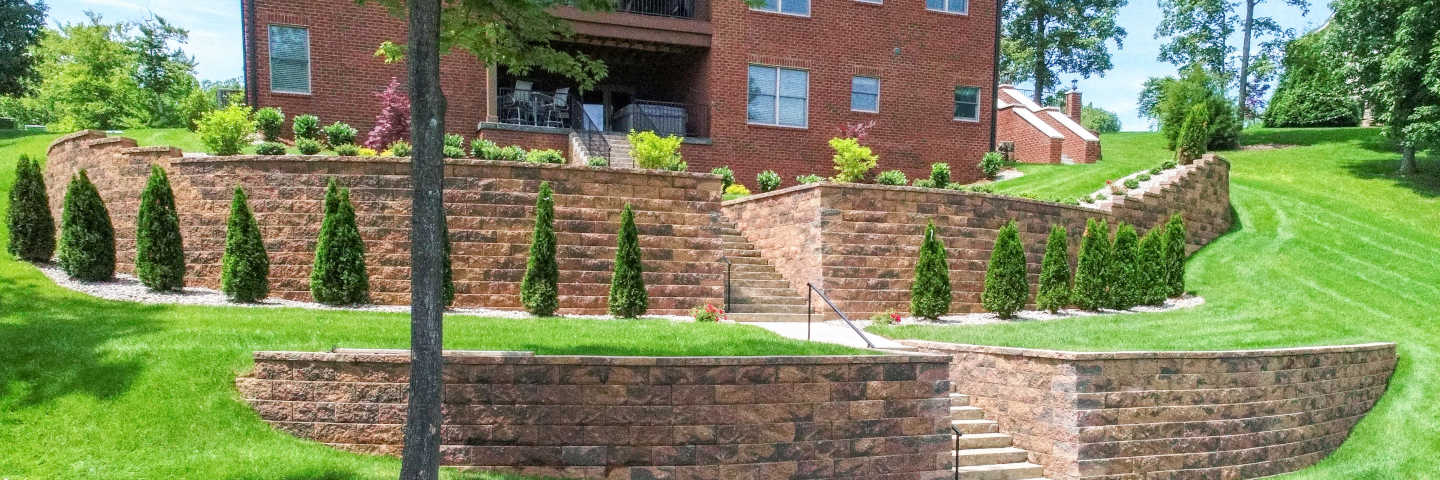
Retaining walls shift in winter because freeze thaw cycles, poor drainage, and soil expansion create pressure behind the wall that it was never designed to handle. In this blog, we explain exactly why retaining walls move during winter, the warning signs to watch for, how much repairs cost in 2026, and what homeowners can do to prevent permanent damage.
Built to Withstand Midwest Winters
Many retaining walls fail in winter because drainage was treated as an afterthought instead of a structural requirement. Freeze thaw cycles alone do not cause walls to shift. Water trapped behind the wall is what creates destructive pressure.
That is why we construct every retaining wall with proper drainage built into the system from day one. This includes engineered gravel backfill to prevent water retention, perforated drain tile at the base to redirect groundwater, proper outlet points to relieve hydrostatic pressure, and footings installed below the frost line. By managing water before it freezes, the wall is protected against the expansion forces that cause leaning, cracking, and bulging.
A retaining wall should not just hold back soil. It should control water. When drainage is installed correctly, winter conditions become manageable instead of destructive.
Why Retaining Walls Shift During Winter
Retaining wall movement is almost always caused by water. In winter, that problem is amplified.
Here’s what happens…
- Water builds up behind the wall in fall and winter
- Temperatures drop and the trapped water freezes
- Frozen water expands, increasing lateral pressure
- Repeated freeze thaw cycles push the wall outward
In Indiana and similar Midwest climates, this process can repeat dozens of times in a single season, making winter the most destructive time of year for retaining walls.
Freeze Thaw Cycles Are the Biggest Culprit
Concrete blocks, stone, and soil all expand when water freezes. When that expansion happens behind a retaining wall, the pressure has nowhere to go.
Industry benchmarks show:
- Water expands by about 9 percent when it freezes
- Even small amounts of trapped moisture can exert thousands of pounds of force
- Walls without proper drainage fail significantly faster in freeze heavy regions
This is why retaining walls that look fine in summer suddenly lean or crack by spring.
Poor Drainage Causes Most Retaining Wall Failures
The number one structural issue behind winter wall movement is inadequate drainage.
Common drainage mistakes include:
- No gravel backfill behind the wall
- Missing or clogged drain tile
- No weep holes for water release
- Compacted soil placed directly against the wall
Without a way to relieve water pressure, the wall becomes a barrier holding back expanding ice and saturated soil.
Warning Signs Your Retaining Wall Is Shifting
Homeowners should inspect retaining walls in late winter and early spring for early signs of movement.
Red flags include:
- Wall leaning outward
- Cracks between blocks or stones
- Gaps forming behind the wall
- Bulging sections
- Water pooling near the base
Catching these issues early can prevent full structural failure.
How to Prevent Retaining Wall Movement in Winter
Preventing winter damage starts with proper design and maintenance.
A well built retaining wall should include:
- Gravel backfill to promote drainage
- Perforated drain tile at the base
- Weep holes to relieve water pressure
- Proper compaction in layers
- Adequate footing depth below frost line
If your wall was built years ago, it may not meet current best practices for freeze prone climates.
Real World Example from Indiana Properties
We frequently see retaining walls in Indiana shift after wet falls followed by cold winters. In many cases, the wall itself was structurally sound, but drainage was overlooked during installation.
Once drainage was added and pressure relieved, the rebuilt walls remained stable through subsequent winters.
When to Call a Professional
Homeowners should seek professional evaluation if
- The wall is visibly leaning
- Cracks are widening year over year
- Soil is washing out behind the wall
- Water remains trapped after snow melt
Ignoring winter related movement often leads to full replacement rather than repair.
Internal Resources for Homeowners
Learn more about our landscape construction and retaining wall services to understand proper wall design.
Frequently Asked Questions
Do all retaining walls shift in winter?
No, properly designed walls with drainage systems can withstand freeze thaw cycles without movement.
Can frost heave cause retaining walls to fail?
Yes. Frost heave increases soil pressure and can push walls outward if drainage is inadequate.
Is wall movement always structural?
Not always, but even small shifts can indicate larger problems developing behind the wall.
Can drainage be added to an existing wall?
In many cases, yes. Adding drain tile and gravel can significantly improve wall stability.
What time of year is best for repairs?
Spring through early fall is ideal, once the ground has thawed and drainage conditions are visible.
Protect Your Retaining Wall Before Winter Damage Gets Worse
Winter doesn’t have to mean expensive retaining wall repairs. With proper drainage, design, and proactive evaluation, you can prevent shifting and extend the life of your wall.
Request a retaining wall inspection today or schedule a consultation to protect your property before the next freeze thaw cycle causes permanent damage.